Trending

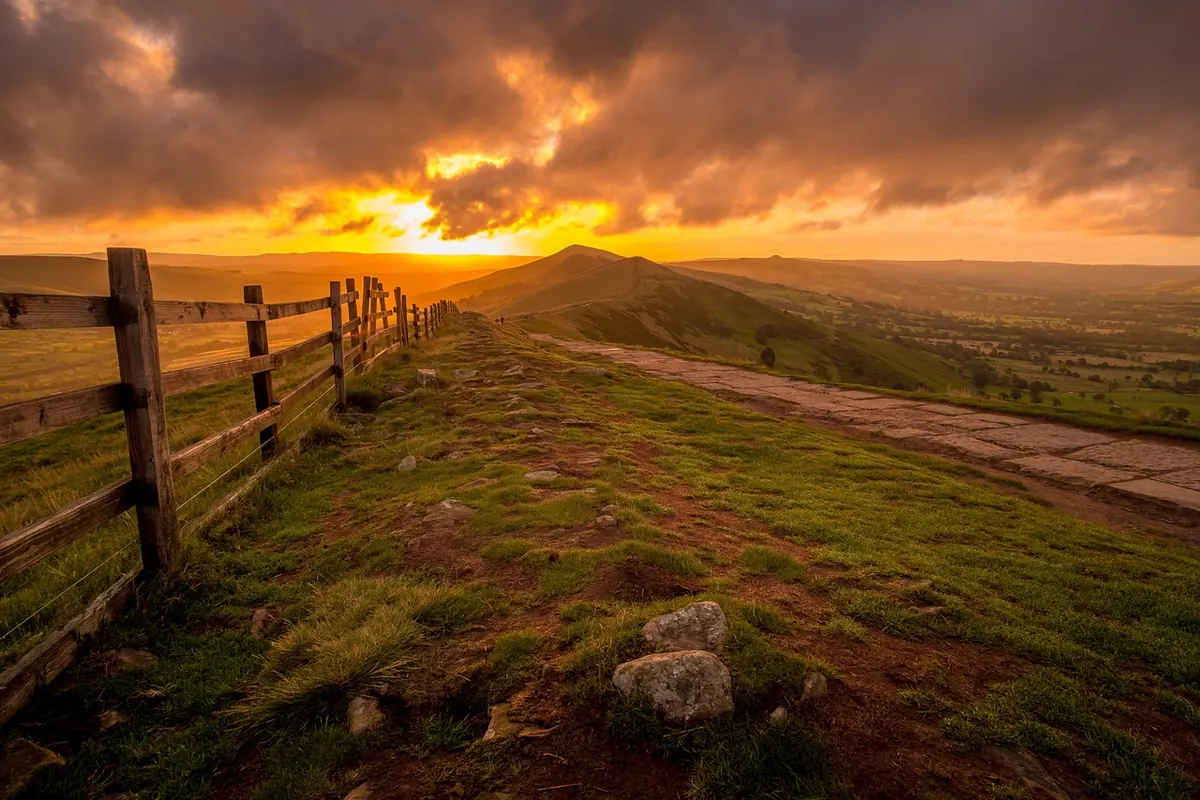
The North Pennines is the quiet one. No big honeypot, no visitor-centre gloss — just a long spine of moorland and dale running from the South Tyne down to Teesdale, stitched together with lead-mining ruins, hay meadows and some of the darkest night skies in England. That quietness is precisely why the wildlife is still here. Red squirrels hold on in the conifer belts, peregrines and merlins work the crags, and Upper Teesdale carries a set of Arctic-alpine plants you will not find anywhere else in the country. These seven walks are the ones worth planning a trip around.
Allenheads sits near the head of the East Allen valley, and the larch and spruce plantations around it are one of the red squirrel's strongest footholds in the North Pennines. Grey squirrels are largely absent here, which is the main reason the reds persist.
Start at the Heritage Centre, follow the track up through the village and into the woods. Go early, before the dog walkers, and walk slowly. Listen for a scratchy scolding from high in the canopy, then look for a drape of tail over a branch. The feeders near the village are the surest bet — sit still for fifteen minutes rather than strolling past.
This is the botanical heart of the North Pennines. The sugar limestone and the thin soils over it support spring gentian, bird's-eye primrose, Teesdale violet, mountain avens and hoary rock-rose — a plant community left over from the last ice age and effectively unique in England. The reservoir was built in 1970 over loud botanical objections, and the reserve around it is now carefully managed.
Park at Cow Green or at Langdon Beck and use the marked paths. The best window is late May to early July, and the gentians are at their bluest on a sunny morning. Do not step off the path to get a closer photograph; these plants grow on ground that takes decades to recover from a single boot print.
Park at Bowlees Visitor Centre and walk the riverside path downstream to Low Force, then up to High Force if you have the legs for the return. Dippers are the stars here: watch a boulder mid-river and wait. A bird will land, bob, then vanish under the surface and reappear a few metres upstream. Look for white droppings on prominent rocks — those are favourite perches.
Grey wagtails work the weirs, common sandpipers arrive in April, and goosanders loaf on the slower pools. In autumn, salmon and sea trout run the Tees; the falls stop most of them, but the attempts are worth watching from the bank.
If a bird stops feeding, or a squirrel freezes and stares, you are already too close. Back off until it carries on with what it was doing.
The old lead workings above Killhope are a strange and specific habitat. Ground contaminated with lead and zinc should be barren, but a handful of specialist plants have moved in — alpine pennycress, spring sandwort and mountain pansy among them. The richest strips are the rough, unimproved spoil beside old shafts and levels, which agriculture never improved.
Walk up from the Lead Mining Museum on the track past the washing floor. Keep to the track edge and view the spoil from a distance; it crumbles underfoot and the plants are small. Curlew and lapwing feed on the wetter ground below, and the conifer belt under the museum is good for red squirrels.
The oakwoods along the Derwent, between Blanchland and Baybridge, are the best place in the area for woodland birds. Pied flycatchers arrive in mid-April and take straight to the nest boxes; redstarts flick through the lower branches; wood warblers sing their thin, spinning song high in the canopy where the oaks are most open. May mornings are unbeatable.
Buzzards mew overhead almost constantly, kestrels hover over the rough grazing, and sparrowhawks shoot through the trees. Red kites have drifted up the valley from the Derwent reintroduction further downstream, so it is always worth a glance at anything large and fork-tailed.
Cross Fell is the highest point in England outside the Lake District, and the walk up from Garrigill is a proper day out — rough, exposed and easy to get wrong in cloud. Go equipped and go in clear weather. What you get for it is the high moorland suite: golden plover, dunlin, curlew, merlin and short-eared owl.
The technique that works is to stop walking. Drop into one of the stone shelters on the summit plateau, sit still for twenty minutes and let the birds come back to you. Scanning a skyline as you tramp across it guarantees you see almost nothing.
Otters have recolonised most of the Tyne system, and the South Tyne between Slaggyford and Alston is as good a stretch as any. You are looking for signs as much as animals: spraints on flat boulders by the water's edge, five-toed prints in the mud, a run through the grass at a bend. Isaac's Tea Trail follows the river over much of this ground.
Dusk gives the best chance of an actual sighting. Find a quiet bend, sit low and stay silent. Do not sweep a torch across the water; if you need light, keep it pointed at the bank behind you. Goosander, sand martin and the occasional kingfisher fill in the gaps during daylight.
The North Pennines makes its own weather, and it changes fast. A few things that make the difference between a good day and a wasted one:
Two rules cover most of it. Stay on the path where the ground is sensitive — Widdybank Fell and the lead spoil at Killhope in particular — and never play recordings of bird calls to pull a bird in. It costs the bird energy it needs, and it is banned on most reserves. Leave nothing behind, take nothing away, and report