Trending

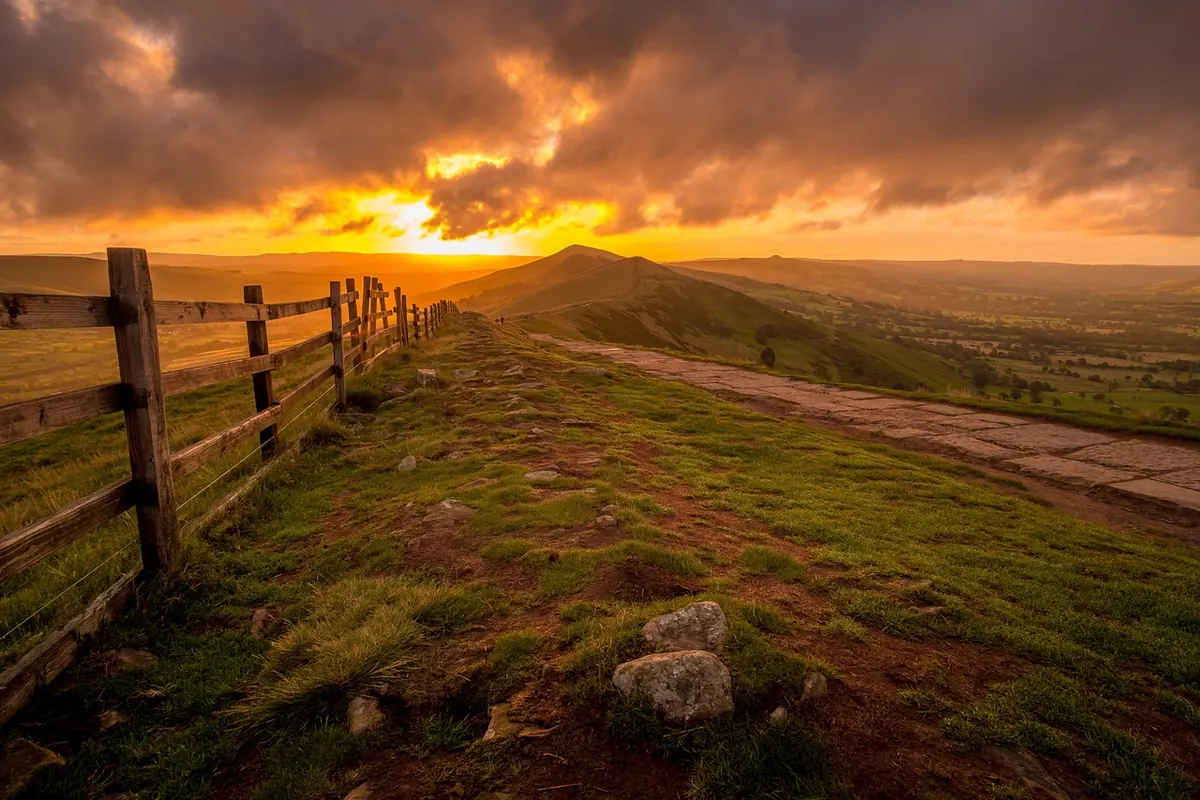
The Pennine Way runs 268 miles from Edale in Derbyshire to Kirk Yetholm, just over the border in Scotland. End to end it asks for two to three weeks, a lot of annual leave and a reasonably kind summer. Most people have none of those things. They have long weekends, a few days at Easter, a fortnight in July if they are lucky. The trail is perfectly suited to being walked in pieces, and doing it that way has real advantages: you get fitter before the hard bits, you learn what kit you actually need, and you are never more than a day from a decent pub.
It also means you can pick your weather. There is no rule that says you must tackle the Cheviots in horizontal rain just because that is where the route happens to end. Section walking turns a logistical marathon into a series of manageable, enjoyable trips — each one with its own beginning, its own summit moment and its own pint at the finish.
The Pennine Way is not uniformly difficult, which is what makes section planning tricky. Some of it is level, grassy and quick: the canal-side stretch near Gargrave, the old drove roads above Hawes. Some of it is punishing: the peat haggs of Bleaklow, the endless flagstones over Black Hill, the slop approaching Cross Fell after a wet week.
A common mistake is to translate home walking speed onto the map. If you comfortably do fifteen miles on lowland paths, plan ten to twelve miles a day here, and expect the first day of any trip to be slower still. Underfoot conditions, stile after stile, bog, and the simple fact that you are carrying a pack all take a toll. A fit walker with a light pack can manage eighteen to twenty miles on the easy sections; the same walker on the northern peat will be doing well to hold twelve.
The Pennine Way is not a race, and it is not a route you can bluff. Plan the miles you can actually do on your worst day, not your best.
Be honest about that weakest day. If you have never walked three consecutive days with a pack, assume day three will be your slowest and build the itinerary around it. Guidebook times are written for someone else's legs.
Section boundaries should be chosen for transport, accommodation and a decent finish. Ending a day on top of Kinder, or in the middle of the Otterburn military range, is no fun. Ending it at a village with a bus stop and a chip shop is.
Work backwards from the places you can actually get to and from. Useful break points include Edale, Crowden, Marsden, Hebden Bridge, Gargrave, Malham, Horton in Ribblesdale, Hawes, Keld, Middleton-in-Teesdale, Dufton, Alston, Greenhead, Bellingham and Kirk Yetholm. Most have buses; a few have trains.
A practical set of splits for a working life might look like this:
If you only have short breaks, spend them where the walking is best rather than working strictly south to north. Keld to Alston is a superb two or three days with barely a road crossing and a real sense of emptiness. The Cheviot section — Byrness to Kirk Yetholm in particular — is a single long, hard day of around twenty-six miles with no easy escape. It is worth saving for a trip of its own, when you are fit and the forecast is settled.
The Pennine Way crosses the country's grain, which means it often runs at right angles to the public transport network. Plan the journey home before you plan the walking.
Section walking lets you be lighter than an end-to-end walker. You do not need three weeks of clothes, and you should not carry them. A pack of eight to ten kilos is achievable.
Section walking takes years. That is the point, and it is also the risk: it is easy to lose momentum after the second trip. Keep a simple log of the miles you have covered, take a photograph at each handover point, and treat the next section as already booked before you go home. A wall map with the completed stretches coloured in is surprisingly effective motivation.
Nobody finishes the Pennine Way in one go unless everything goes their way. Finishing it in eleven pieces over five years is just as much a completion.
Plan for the weather you might get, not the weather you want. Leave the high northern sections for late spring or early autumn, when the bogs have drained and the midges have gone. And build in a spare day for every three you walk — not because you will need it, but because knowing it is there lets you enjoy the day you are actually in.
Photo: pasja1000 / Pixabay